BETTING
Basketball Betting Strategies
We wrote this guide around the arithmetic a reader can redo on paper, and we name no operator in it.
Last reviewed
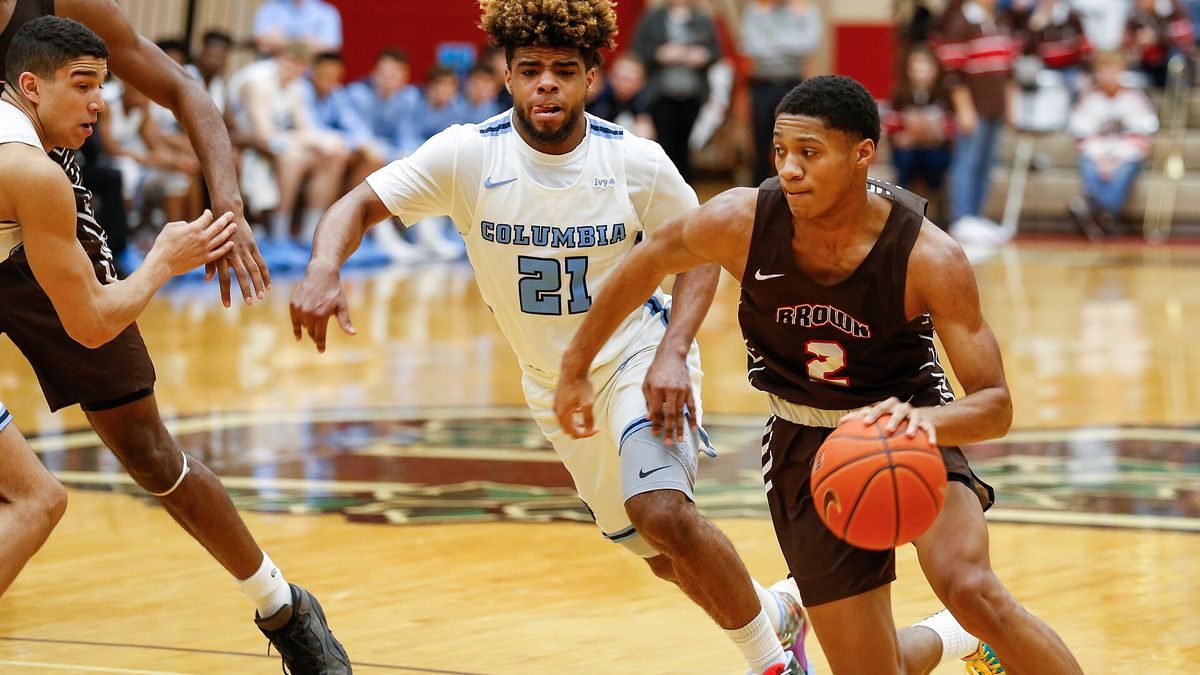
Photo: Kenneth C. Zirkel, CC BY-SA 4.0 · source file

Basketball is fast. Odds move fast too. This guide shows simple, safe, and clear steps you can follow each week. You will learn how to size your bets, how to find value before tip-off, how to build a basic numbers model without code, and what to watch in live betting. The language is simple. The ideas are real. We avoid hype and “guarantees.”
How Basketball Betting Works (In Short)
There are three common bet types:
- Moneyline: You pick which team wins the game.
- Point Spread: The favorite gives points. The underdog gets points.
- Totals (Over/Under): Bet on the total points scored by both teams.
Each price has a vig (the book’s fee) and an implied probability (the chance the price suggests). Your goal is simple: find bets where your own estimate is better than the market price. Protect your bankroll first. Look for small edges and let them add up.
Bankroll Rules You Can Stick To
Your bankroll is the money you set aside only for betting. Treat it like a project budget.
Pick a Unit Size
Use 0.5% to 1.5% of your bankroll per bet. Example: if your bankroll is $1,000, your unit is $5–$15. Beginners should start near 0.5%.
Kelly Lite (Simple)
Full Kelly is too wild for most people. If your estimated edge is small, you can use a conservative fraction. Simple rule: bet size = 0.25 × edge ÷ odds (very rough). If this gives more than 1.5% of bankroll, cap it at your max unit.
Stop-Loss and Weekly Cap
- Daily stop-loss: 3–5 units.
- Weekly stop-loss: 10–15 units.
- Never increase unit size to chase losses.
Track Results and CLV
Keep a simple log: date, market, your price, the price you bet, the price at close, and result. Closing Line Value (CLV) means you beat the final market number. E.g., you bet +4.5 and the line closes +3.0. That is good process.
Key Takeaways:- Use 0.5%–1.5% per bet. Do not go higher.
- Set daily and weekly stop-losses and respect them.
- Track CLV; over time, CLV is a strong signal your edge is real.
Finding Value Before Tip-Off
Before the game starts, the market moves as news drops and money enters. You can find value with a simple process:
Price Shop for the Best Number
Different books show different lines and vig. Make a habit of checking at least 2–3 books before you place a bet. A half-point better spread can flip long-term results.
Time the Market
Markets move around news windows. For the NBA, watch morning shoot-around, mid-day reports, and late scratches. If you expect a move, bet early. If you expect public money to push a favorite later, you can wait and fade that move.
Read News with Context
- Injuries/rest: Star out? Role players matter too. Two bench wings out can change pace and 3PT rate.
- Schedule: Back-to-back games (B2B), three games in four nights (3in4), long travel legs, and altitude can affect energy and foul rates.
Pace and Efficiency (Core Inputs)
Most totals and spreads react to two things: possessions (pace) and points per possession (efficiency). If you can estimate both, you can build your own number.
Mini-Framework: Number → Narrative → News → Price
- Number: Start with your model’s spread and total.
- Narrative: Does style or matchup support the number?
- News: Injury, rest, travel. Adjust if needed.
- Price: Bet only if your edge beats a threshold (e.g., 1–2 points vs. spread or 5–8 points vs. total).
Spread & Totals Angles That Age Well
Against the Spread (ATS)
- Rim pressure vs. weak interior: A team that attacks the paint can punish a thin frontcourt. Fouls rise. Free throws rise.
- Bench depth: If a contender rests two key bench players, late 3rd/early 4th can swing.
- Turnover gap: A big gap means more transition points and foul trouble.
Totals (Over/Under)
- Pace projection: If both teams play fast, total should be higher. If one team can slow the other (half-court defense), total drops.
- 3PT variance: Hot starts in Q1 often cool down. Do not overreact.
- Foul rates: Physical matchups and thin big depth can push late free throws and late-game fouling near the spread.
Example: How Pace Adjusts a Total
| Style matchup | Est. Possessions | Off. Eff A | Off. Eff B | Your Total | Market Total | Edge |
|---|---|---|---|---|---|---|
| Fast vs fast | 101 | 1.15 | 1.12 | 228 | 223.5 | +4.5 Over |
| Slow vs slow | 95 | 1.10 | 1.08 | 209 | 212.5 | –3.5 Under |
| Fast pace, weak offenses | 103 | 1.07 | 1.09 | 219 | 217.5 | +1.5 Over (pass) |
| Slow pace, one-sided offenses | 97 | 1.14 | 1.06 | 213 | 214.0 | –1.0 Under (pass) |
| League-average pair | 100 | 1.12 | 1.10 | 222 | 219.0 | +3.0 Over |
Worked example. The matchups and numbers above are illustrative, not real games.
Note: Only act when the edge clears your threshold. Small edges can vanish with one news update.
Key Takeaways:- Focus on pace, efficiency, and foul risk.
- Pass if your edge is thin. The next spot will come.
- Late-game fouling matters near tight spreads.
Simple Modeling You Can Maintain (Spreadsheet-Friendly)
You do not need code. A spreadsheet is enough. Build this in three parts.
Step 1: Estimate Possessions (Pace)
Use recent games for each team (last 10–15) and adjust for opponent style. A simple average is okay. If both teams push in transition, add 1–2 possessions. If one team plays very slow, subtract 1–3.
Step 2: Estimate Offensive Efficiency
For each team, start with season offensive rating, then nudge up or down for health and matchup:
- Injuries: If a star is out, drop team ORtg by a few points; if a key rim protector is out, raise opponent ORtg a bit.
- 3PT quality: If opponent allows many corner 3s, raise 3PT efficiency slightly.
- Regression: If a team shot 55% from 3 in two games, expect a step back.
Step 3: Project Score and Market Compare
Projected Total ≈ Possessions × (ORtg_A + ORtg_B) ÷ 200 ( since ORtg is points per 100 possessions)
Projected Spread ≈ (ORtg_A – DRtg_B) – (ORtg_B – DRtg_A), then scale by possessions and home court (use a very small home value; the edge is smaller than it used to be).
Validate and Avoid Overfit
- Back-test vs. closing lines. Track mean absolute error (MAE).
- Do not add many knobs. Keep it stable so you can maintain it.
- Re-check weights monthly. Injuries and rotations change.
- Simple beats fancy if you actually keep it updated.
- Use a fixed bet threshold so you do not talk yourself into thin edges.
- Validate vs. closing lines; chase process, not one-off wins.
Live Betting Rules (Do Not Chase)
Live markets move fast. If you do not have rules, skip live betting. If you do, keep them tight:
- Foul trouble: If a key big has 3 fouls at half, pace and rim scoring can shift. Totals may drop if teams avoid contact.
- Shooting swings: Early 3PT heater or cold streak often mean reversion. Look for prices that assume the current streak will last all game.
- Second-half pace change: Coaches adjust. If both teams slow down, live unders can appear even when first-half was high.
Never raise unit size in-game. Use your normal unit or smaller. Pre-set your triggers before the game starts.
Props & Player Markets
Props can offer edges if you follow rotations and usage.
- Usage bumps: If a star sits, a secondary ball handler’s assists or points may rise. Look at minutes floor and role, not just name value.
- Matchup: Some teams allow many corner threes. Others give up mid-range pull-ups. Tie the prop to shot diet, not vibes.
- Correlation traps: Stacking multiple overs on one player can be double-counting the same idea. Be careful with same-game parlays.
- Minutes + role first; usage follows.
- Model the stat path (shots, pace, fouls), not just the player’s name.
- Avoid over-correlated legs in the same game.
When Not to Bet
- You have thin info (unclear injury status, weird travel, coaching change).
- You are on tilt after a loss or a bad beat.
- Your model is out-of-sample (new rotations, small data, preseason or late tank season).
- The market steamed hard and you missed the number. It is okay to pass.
Tools, Data & Where to Learn More
Use trusted sources and explain to readers why a link helps. A few examples:
- NBA Stats Glossary — clear stat definitions (pace, offensive rating, etc.).
- Basketball-Reference — team/player logs, pace, lineups, on/off data snapshots.
- NCAA Basketball — schedules, context for college pace and travel.
- FIBA — international rules and competitions (different pace and style).
- Official NBA Injury Report — daily updates that move lines.
- Pace & Efficiency Explainers — any clear glossary you trust for formulas (use one consistent source).
Independent comparison (natural, non-spammy self-link): Before you place a bet, compare books. Lines, juice, limits, and payout speeds can differ a lot. Our review hub at onlinecasinotips.net summarizes licensed options, market depth, line movement windows, and user-verified withdrawal notes. Use it as a quick checklist so you can pick a sportsbook that fits your routine.
FAQs
What is a safe unit size for basketball betting?
Most people use 0.5%–1.5% of bankroll per bet. Start small. Protect the roll.
How do I find closing line value (CLV)?
Price shop, watch injury windows, and bet when your number beats the market by a clear margin. Track open vs. close in a log.
Is live betting better than pre-game?
Not by default. It is only better if you have clear rules and triggers, and you keep the same small unit size.
Should I use parlays?
Parlays raise variance and add extra vig. If you do them, keep them rare and small. Avoid stacking highly correlated legs.
When is the best time to bet basketball?
There is no perfect time. Bet when your number shows edge and the news is clear. Sometimes that is early. Sometimes that is late.
Responsible Gambling & Legal Note
Bet only if it is legal where you live and only if you are over the legal age. Set limits. Take breaks. If betting harms your mood, money, or relationships, stop and seek help.
- BeGambleAware
- GamCare
- National Council on Problem Gambling (US)
- GambleAware (AU)
- Responsible Gambling (Victoria)
Rules, lines, and products change. Always check official and current sources. For basketball rules and schedule info, see NBA.com, NCAA.com, and FIBA.
Conclusion: A Routine You Can Repeat
Keep it simple and steady. Use a small unit. Build a basic pace and efficiency model. Bet only when your edge is clear and the news is stable. Track your prices and results. Over time, process beats emotion.