BETTINGPublished 4 min read
Converting American Odds Into a Break-Even Number
We convert a price into the win rate it demands, and the arithmetic takes one line.
Last reviewed
A minus-150 tag on the board means you need to win six out of every ten bets just to walk away even. A plus-220 asks for fewer than one in three. These American prices are not payouts dressed up in symbols; they are break-even percentages hiding in plain sight, and two quick divisions strip away the disguise.
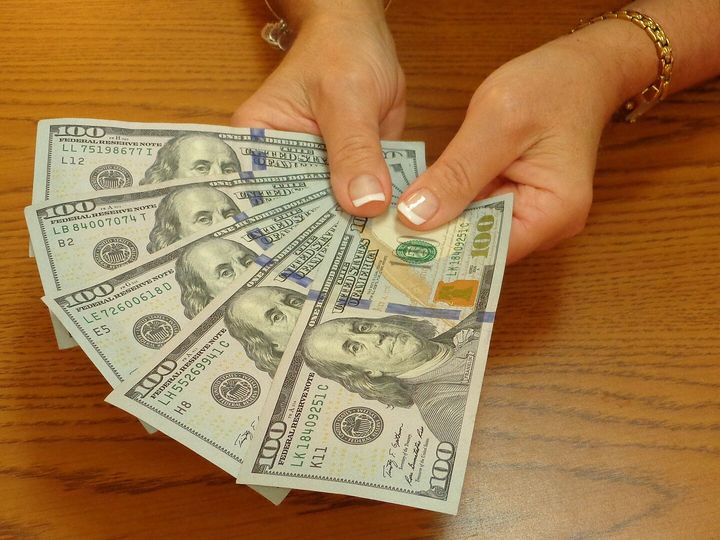
Photo: DigiGal DZiner, CC BY-SA 4.0 · source file

What the minus and the plus mean
The American system uses signed integers to describe how much money moves relative to a $100 stake. A negative number tells you what you must risk to win $100; a positive number tells you what you will collect if you risk $100. The minus sign always belongs to the favorite, the plus sign to the underdog, though the arithmetic works identically in either direction.
To translate a negative American price into decimal form, divide 100 by the absolute value and add 1. Minus 150 becomes 1 plus 100 over 150, which lands at 1.667. For a positive price, swap the roles: divide the number by 100 and add 1. Plus 220 becomes 1 plus 2.20, or 3.200. The decimal figure represents your total return per dollar staked, principal included. Multiply your wager by that number and you have the payout on a winning ticket.
These two formulas are the only machinery you need. Everything that follows is simple arithmetic on top of them.
Price conversion
| American | Decimal | Implied | Stake to win $1 |
|---|---|---|---|
| -300 | 1.33 | 75.0% | 3.00 |
| -250 | 1.40 | 71.4% | 2.50 |
| -200 | 1.50 | 66.7% | 2.00 |
| -150 | 1.67 | 60.0% | 1.50 |
| -130 | 1.77 | 56.5% | 1.30 |
| -110 | 1.91 | 52.4% | 1.10 |
| +100 | 2.00 | 50.0% | 1.00 |
| +110 | 2.10 | 47.6% | 0.91 |
| +130 | 2.30 | 43.5% | 0.77 |
| +150 | 2.50 | 40.0% | 0.67 |
| +200 | 3.00 | 33.3% | 0.50 |
| +250 | 3.50 | 28.6% | 0.40 |
| +300 | 4.00 | 25.0% | 0.33 |
| +400 | 5.00 | 20.0% | 0.25 |
Arithmetic, not a price list: the table converts a number into the win rate it demands.
From decimal to a percentage
The decimal price contains a hidden probability. To extract it, divide 100 by the decimal figure. That quotient is the implied probability: the likelihood the price assumes the outcome will occur. It is also, identically, the break-even win rate. Hit that percentage over time and your ledger balances; fall short and the vigorish grinds you down.
For the minus-150 we converted earlier, 100 divided by 1.667 equals 60.00 percent. You must win three-fifths of these bets merely to stop bleeding. For the plus-220, 100 divided by 3.200 equals 31.25 percent. Win less than one-third and you are underwater; win more and you edge ahead. The price has already baked in the house edge, so matching the implied probability produces zero profit, not positive expected value.
This is the central fact American odds obscure. The symbols feel like they describe payoff ratios, and they do, but their deeper function is to state a required success rate. Every tag on the board is a silent demand.
The worked numbers
Here is how the arithmetic plays out across the prices you will most often see.
Minus 150 converts to 1.667 and demands 60.00 percent. Minus 115, a common spread price, becomes 1.870 and requires 53.49 percent. The industry standard minus 110 translates to 1.909 and asks for 52.38 percent. Step out to minus 120 and the decimal drops to 1.833 while the required win rate climbs to 54.55 percent. On the plus side, 220 converts to 3.200 and needs only 31.25 percent.
Notice how sensitive the break-even rate is to small moves in the price. A shift from minus 110 to minus 120 raises your required success rate by more than two full points. Over a season of wagers, that gap devours bankrolls. The prices look close together on the board; the mathematics says otherwise.
Why both sides add up to more than a hundred
In a two-way market, both prices carry their own implied probabilities. When both sides sit at minus 110, each converts to 52.38 percent. Sum them and you reach 104.76 percent. The extra 4.76 points are not a rounding error; they are the bookmaker's margin, the commission extracted from every dollar entering the pool.
That 4.76 percent overround represents 4.55 percent of the total handle. The house does not need to predict outcomes better than the bettor. It needs only to balance action at prices that guarantee this surplus. The break-even percentages you calculate for yourself already include this extraction. You are not trying to beat the true probability of an event; you are trying to beat a number inflated by the vig.
Some bettors mistake the two-sided total for a market inefficiency they can exploit by taking both sides. They cannot. The prices are constructed so that simultaneous wagers lose the margin regardless of outcome. The arithmetic is relentless.
Checking a price in your head
You do not need a calculator to estimate your required win rate. For minus prices near 100, add 100 to the absolute value and divide by two. Minus 110 becomes roughly 105 over 200, or 52.5 percent, close enough for a quick read. For plus prices, divide 100 by the sum of the price and 100. Plus 200 gives 100 over 300, or 33.3 percent.
These approximations drift further from precision as the prices steepen, but they serve at the ticket window when you need a sanity check in seconds. The exact figure is always 100 divided by the decimal, but the mental shortcut tells you whether a price is asking for three wins in five, two in three, or one in four.
A minus-120 line wants you to win 55 out of a hundred. Ask yourself whether your read on the game justifies that rate.
More in Betting
 10002The Run Line, and Why Baseball Prices Look DifferentWe explain why a fixed run line moves the price instead of the handicap.MLB
 1.503What Five Cents Costs: −110 Against −115We put −110 next to −115 and show what five cents costs over a season.
 5¢
5¢