TRADESPublished 4 min read
Trading Budget Instead of Players: FAAB as an Asset
We run three separate budgets, so in this league money trades as readily as players.
Last reviewed
A dollar of free-agent budget in our league carries a delivery date and a price like any other tradable instrument. The rules that govern it are stark: $100 per season per sport, three separate budgets running simultaneously, each treated as property that can change hands mid-year.
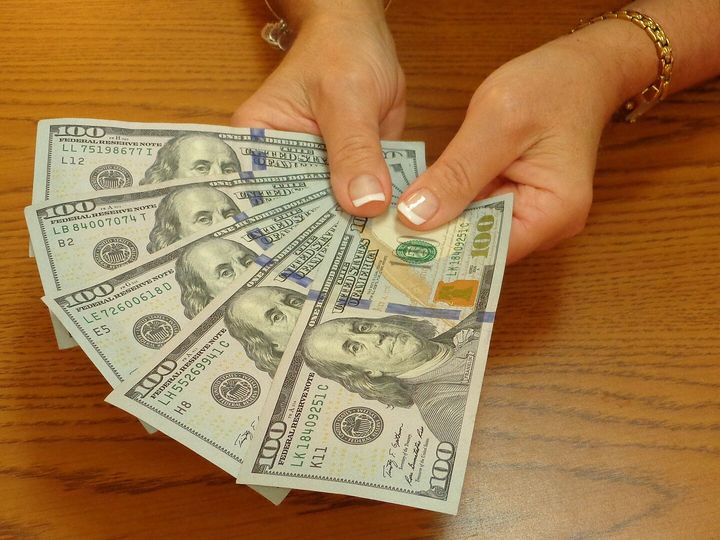
Photo: DigiGal DZiner, CC BY-SA 4.0 · source file

Three budgets, not one
The structure is intentionally fractured. Baseball, basketball and football each maintain independent FAAB pools under the same $100 ceiling, and no surplus in one sport shores up a shortage in another. The minimum bid sits at $0, a technicality that matters more than it appears—owners can stash claims on players for free, burning only their waiver priority when ties occur. That priority is determined by reverse order of standings on the day waivers run, a mechanism that punishes success and keeps the bottom half of every table liquid.
The schedules diverge sharply. Baseball and basketball process their Sunday night runs weekly, a predictable rhythm that lets owners plan claims around weekend lineups. Football operates on compressed time: daily windows from Thursday through Sunday at 11am EST, a four-day sprint that exhausts budgets faster and rewards the owner who checks injury reports at 10:45 Thursday morning. Same asset, different velocity.
Latest trades on file
- Keri ⇄ GrantKeri got Tanner Roark · Grant got James Jones
- Mayo ⇄ LeitchMayo got $40 NFL FAAB · Leitch got Billy Hamilton
- Mergler ⇄ RankMergler got $32 Supplemental FAAB · Rank got Justice Winslow $10 NFL FAAB
- Dameshek ⇄ CielyDameshek got Julius Thomas · Ciely got Ender Inciarte Jose Fernandez
- Iacono/Gewitz ⇄ Evans/FunstonIacono/Gewitz got Chris Ivory George Springer $37 MLB FAAB · Evans/Funston got Travis Benjamin $15 NFL FAAB
- Keri ⇄ SporerKeri got Mike Trout Josh Donaldson Aroldis Chapman · Sporer got Patrick Beverley $15 NBA FAAB Dylan Bundy Hunter Pence Sam Dyson
The six most recent deals in the ledger, both sides as filed.
Why a budget trades at all
The buyers in these deals are purchasing something peculiar—claims on players who do not exist in the league yet. A FAAB dollar is not a share of Mike Trout or Justin Jefferson; it is a option on the unknown quantity who will replace them after the next injury, suspension or demotion. The seller, meanwhile, is typically consolidating: trading future flexibility for present roster strength, betting that the points scored now outweigh the claims forfeited later.
This creates a futures market of sorts, but one with forced expiration. Unspent budget dies at season's end. There is no carryover, no interest, no hedge. The calculus for buyer and seller must account for this decay—the same dollar bid in Week 2 commands more talent than the same dollar bid in Week 14, when the pool of available players has evaporated.
Next season's money
The rules push this logic one step further. The immediately following season's FAAB may be traded during the current campaign—during the 2018-2019 season, owners could deal their 2019-2020 allocations. This is not a loan; it is a straight transfer of next year's purchasing power into this year's trade package. The league's own books record these as distinct line items: 2018-19 FAAB and 2019-20 FAAB trade on separate ledgers, and a deal may specify which vintage moves.
The practice converts seasonal fantasy into something nearer dynasty management. An owner with a barren 2018-19 balance but surplus 2019-20 funds can effectively mortgage the future, while a rebuilding club can strip its next-year budget for present talent. The board tracks these obligations across sport lines—baseball future money may be traded for basketball present help, though the budgets themselves never commingle.
What a pickup costs later
A FAAB acquisition carries downstream consequences that do not appear on the transaction log. Any player claimed via FAAB bid defaults to a 20th-round keeper designation, unless his original draft slot was higher. The mechanism is specific: a player drafted in the 12th round and later dropped reverts to a 10th-round keeper value for his new owner, while one taken in the 35th round becomes an 18th-round keeper. The FAAB bid itself—whether $45 or $0—does not affect this calculation.
This means the savvy trader prices two variables: the immediate production expected from the player, and the keeper slot he occupies. A $15 bid on a 12th-round drop is buying a 10th-round keeper; the same $15 on a late flier is buying an 18th-round keeper. The budget dollar is not uniform—it purchases different equity depending on the asset it secures.
Where the budget market stops
The league draws hard boundaries around what may circulate. Future draft picks cannot be traded, full stop, with one exception: the current year's supplemental draft. This isolates FAAB as the sole true futures instrument—there is no market in 2020 draft slots, only 2020 budget. Offseason pickups are prohibited entirely, a rule that seals rosters from the championship game through the following spring. Trading, however, remains continuously available. The winter months become a secondary market in obligations, as owners swap 2019-20 baseball budget for 2019 basketball help, or clear 2018-19 football surpluses before they expire worthless.
The last week of any season presents a peculiar arithmetic. Budget unspent by the final waiver run carries no value, cannot be banked, cannot be sold for salvage. The owner holding $37 in Week 16 has the same effective resources as the owner holding $0—both must watch the season close with unexercised claims. It is in this window that the budget's nature as a depreciating asset becomes literal: a dollar that bought a starter in September cannot buy a handshake in December.
More in Trades
 7402Three FAAB Budgets, One Season: How to Spend ThemWe spend three budgets against three calendars, and the spending plan is a season-long decision.303When to Trade When Your Season Never EndsWe never reach a true offseason, so the timing question changes shape entirely.
 3
3