DRAFTSNFLPublished 5 min read
Keeper Value: Why a Kept Player Costs Two Rounds
We price keepers in rounds, and the cost is easier to see once you write it as arithmetic.
Last reviewed
The rules published at lgofleagues.com/rules/ set a keeper's price at the round he was drafted minus two in his first kept year. An 18th-round pick from 2017 becomes a 16th-round keeper in 2018, then a 12th-round keeper in 2019, and hits the open pool in 2020. That arithmetic, repeated across every roster in the league, turns a keeper list into an exercise in subtraction and collision.
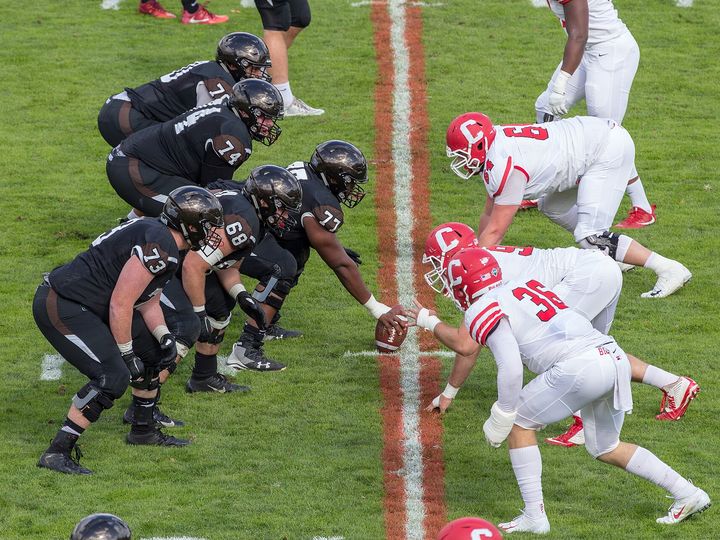
Photo: Kenneth C. Zirkel, CC BY-SA 4.0 · source file

The price of keeping someone
Each team may keep up to six players in total across all sports each year. Keeper lists are due between 15 and 30 days before the next draft begins. The deadline is not a suggestion: once it passes, the kept players are locked and the remaining rounds are all that remain for the live draft.
The first year a player is kept, his value is the round he was drafted in minus two. The second year, another four rounds come off. There is no third year. This creates a natural decay: a late-round steal becomes expensive fast, and a mid-round regular becomes a bargain that expires. The rule forces owners to calculate not just this season's value but next season's cost, and the season after that when the player returns to the pool.
The six-player limit spreads the talent. An owner who found three 20th-round gems cannot keep them all indefinitely; the arithmetic compresses their value and the calendar enforces their release. The keeper list becomes a portfolio with a fixed expiration date on every holding.
The board, round by round
Source: the league’s own draft board, as published on this site since 2015.
The worked example in our own rules
Our rules document follows a single player through the full cycle. A player drafted in the 18th round in 2017 costs a 16th-round pick to keep in 2018. That same player, kept again, costs a 12th-round pick in 2019. In 2020 he returns to the draft pool, reset to whatever round he is selected in that year, and the cycle begins again for some other owner.
The example is chosen to show the compression. An 18th-round pick that becomes a 16th-round keeper saves two rounds of draft capital. Kept again, that same player saves six rounds against his original draft position. But the savings peak there. The 12th-round cost in year two is still a bargain for a player who has appreciated, yet the owner knows the player walks after that season. The keeper list must be built with that endpoint in mind.
The rules document does not explain why the second-year penalty is four rounds rather than another two. The effect is to accelerate the cost. A player kept twice costs six rounds of draft position against his original slot, and the third year is prohibited entirely.
When two keepers collide
The arithmetic has a complication. Two keepers that land on the same round value cost an extra round. An owner with two 14th-round keepers does not give up the 14th pick twice. He gives up the 13th and the 14th.
This changes the calculation. Two players drafted in the 16th round both become 14th-round keepers in their first kept year. The owner pays 13th and 14th, not 14th and 14th. The effective cost of the second keeper is a 13th-round pick, and the pair costs one round more than the simple subtraction suggests.
Owners must therefore track not just their own keeper values but their collisions. A keeper list with three players all priced at the 10th round costs the 8th, 9th, and 10th picks. The cascade can push a keeper into territory where the draft capital is better spent on new players. The rule forces owners to diversify their keeper rounds or pay the premium for concentration.
Where a keeper comes from
Not every player enters the keeper pool through the main draft. Supplemental picks count as 20th-round selections for keeper purposes unless the owner used a higher main-draft pick to set his place in the supplemental order. A 14th-round pick used that way makes the supplemental selection a 14th-round keeper. A 40th-round pick leaves it at the 20th.
This creates a strategic fork. An owner who spends a high pick to secure supplemental position is also setting that player's keeper price. The 14th-round investment becomes a 12th-round keeper in year one, then an 8th-round keeper in year two. The owner who waits and uses a 40th-round pick on supplemental position gets a 20th-round baseline, which becomes an 18th-round keeper, then a 14th-round keeper. The gap widens with time.
Free-agent acquisitions follow a similar rule. A player picked up on a FAAB bid counts as a 20th-round selection for keeper purposes unless he was drafted earlier than the 20th. A player drafted in the 12th round and later dropped is a 10th-round keeper. A player drafted in the 35th is an 18th-round keeper. The rule preserves the original draft position as a floor. An owner cannot buy a former 12th-round pick for a dollar and keep him as if he were undrafted.
What the rule is actually for
The design is deliberate. A kept player must cost enough that keeping is a choice, not a default. The two-round discount in year one and the four-round discount in year two create appreciation without creating permanence. The prohibition on a third year ensures turnover.
Our board could have set different numbers. A three-round discount in year one and a three-round discount in year two would create a different curve. The chosen structure front-loads the bargain and accelerates the cost, which rewards the owner who identifies value early and releases it before the price peaks. The 12th-round keeper in 2019 from our worked example is still a bargain, but the owner knows the player walks in 2020, and so must plan the replacement or trade the asset before the deadline.
The collision rule reinforces the same principle. Concentration of keeper value in a single round is taxed. The extra round is not a penalty but a price for stacking bargains.
Every keeper returns to the pool. The 2019 12th-round keeper, the colliding 14th-round pair, the supplemental pick bought with a 40th-round chip: all of them enter the draft in 2020, and the arithmetic begins again for whoever selects them.
More in Drafts
 1402Building a Draft Board When the Sports Do Not MatchWe build one board for three sports, and the hard part is comparing players who never meet.
 70003Drafting Across Three Sports in One RoomWe draft three sports in one room, and the room behaves like nothing in a single-sport draft.50