DRAFTSPublished 6 min read
Drafting Across Three Sports in One Room
We draft three sports in one room, and the room behaves like nothing in a single-sport draft.
Last reviewed
Fifty rounds. Seven hundred picks. In the first ten rounds alone, the board holds 140 selections: 53 baseball, 51 basketball, 34 football. The entire draft happens in one room, with every manager staring at the same problem—sorting 700 names into 14 rosters across three sports—while each sport demands a different depth of preparation.
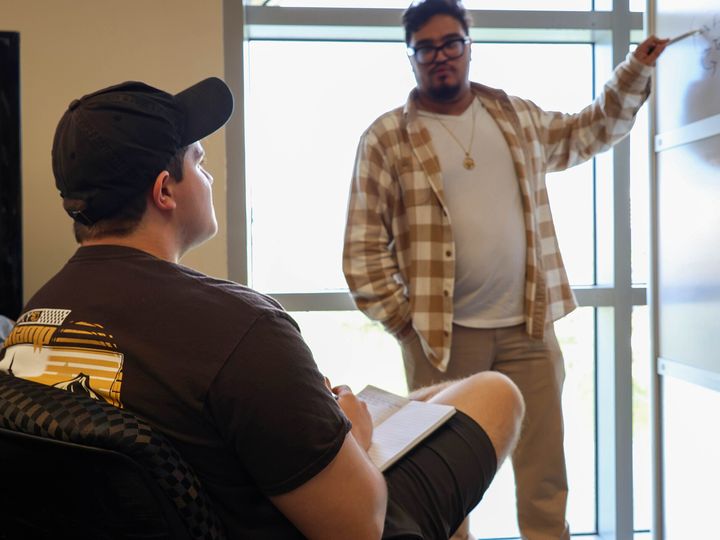
Photo: Heidy Garcia, CC BY 4.0 · source file

One room, fifty rounds
The scale is fixed by arithmetic. Fourteen teams multiply 49 roster slots plus one supplemental spot: 700 picks total, published on the league's draft board at lgofleagues.com/draft-results/. The supplemental spots account for 14 of those picks, leaving 686 for actual players. Baseball claims exactly half: 350 picks. Football takes 182. Basketball fills 154. The distribution is not equal, and it was never meant to be.
The league's rules document, posted at lgofleagues.com/rules/, states the roster construction plainly: "TOTAL = 49 PLAYERS PER TEAM FOR ALL SPORTS AND 1 SUPPLEMENTAL DRAFT SPOT X 14 TEAMS = 700 PLAYERS DRAFTED FOR THE LEAGUE." That single line governs every decision in the room. Each manager leaves with 49 usable players and one placeholder slot that carries no sport designation. The supplemental spot sits outside the three sports entirely, a wild card that breaks the symmetry.
Fifty rounds means fifty passes around the table. Snake order or straight, the rhythm is relentless. A manager tracking only one sport will watch dozens of picks fly past that carry no relevance to their roster. The baseball-heavy drafter sees basketball and football names scroll by for minutes. The football specialist endures long sequences of minor-league prospects and G League contracts. The room itself enforces patience. No one escapes the full 700.
The board, round by round
Source: the league’s own draft board, as published on this site since 2015.
What the early rounds hold
Rounds 1–10 consume 140 picks, and the sport balance shifts hard toward diamond and hardwood. Baseball dominates with 53 selections. Basketball places 51. Football trails at 34. The early board is crowded with bats and wings, while running backs and wide receivers arrive in thinner streams.
This ordering imposes a cost. A manager targeting football talent in the first ten rounds faces compressed supply. Thirty-four names spread across 14 teams means roughly 2.4 football picks per team in this window, assuming even distribution. In practice, some managers grab three or four; others take one or none. The scarcity forces decisions: reach early for a quarterback you trust, or wait and trust the later pool.
Basketball's 51 early picks suggest deeper talent availability, but the sport's roster demands are slighter—only 11 slots per team across the full draft. Those 51 names in rounds 1–10 represent nearly half a team's basketball roster settled before round 11 begins. Baseball's 53 picks, against 25 required slots, leave more runway. The sport with the shallowest per-team need (basketball) and the sport with the deepest (baseball) both crowd the early board, while football's heavier roster burden gets lighter early representation.
The supplemental spots, all 14, are scattered through these rounds. They break up sequences, create irregular gaps, and remind drafters that not every selection fills a position.
What the late rounds hold
Rounds 41–50 reverse the pattern. Another 140 picks close the draft, but the sport counts have shifted: 67 baseball, 47 football, 21 basketball. The basketball pool has nearly dried up. Two-thirds through the final third of the draft, basketball selections become rare events. Managers still needing hoops players face thin options or forced reaches.
Baseball's 67 late picks reflect its massive roster footprint. Twenty-five slots per team, multiplied by 14 teams, demands sustained investment through all fifty rounds. The sport simply has more names to place. Football's 47 late selections exceed its early-round presence, suggesting either deeper talent pools at the margins or roster construction strategies that defer positional needs.
The basketball collapse is stark: from 51 picks in rounds 1–10 down to 21 in rounds 41–50. A manager who neglected the sport early cannot make up ground late. The board does not forgive procrastination. The late rounds become a baseball-and-football exercise, with basketball names appearing as occasional punctuation.
This asymmetry shapes preparation. A drafter building a 300-name basketball list has wasted 280 entries. A drafter with 30 basketball names and deep baseball research owns the room's final hours.
Three roster shapes at one table
The 49-slot roster splits unevenly: 25 baseball, 13 football, 11 basketball. Each sport presents a different optimization problem, and the draft board reflects all three simultaneously.
Baseball's 25 slots consume more than half a team's roster. The sport dominates the board by volume, and its late-round persistence follows directly from this arithmetic. A manager cannot hide from baseball picks; they arrive in every phase of the draft, early and late, thick and thin. The 350 baseball selections across 50 rounds mean seven baseball names per round, on average, scattered through snake sequences that break rhythm unpredictably.
Football's 13 slots create a middleweight demand. The 182 total picks yield roughly 3.6 football selections per round. The early scarcity (34 in ten rounds) and late abundance (47 in ten rounds) suggest either strategic deferral by managers or genuine tiering in the talent pool. Either way, the football drafter must track a curve, not a straight line.
Basketball's 11 slots place the lightest load. The 154 total picks average 3.1 per round, but the distribution is brutal: front-loaded early, nearly absent late. The manager who understands this curve can compress their preparation. Eighty percent of basketball value concentrates in the first thirty rounds, by pick count. The final twenty rounds offer scraps.
The supplemental spot operates outside this structure. It carries no sport designation, no positional requirement. Some managers use it for upside prospects in any sport. Others treat it as roster flexibility, a hedge against injury or suspension. The spot's existence explains why the math never quite squares: 49 sports slots plus one wild card, not 50 clean divisions.
What a manager prepares before the room opens
The board's shape dictates three distinct research projects. For baseball, the list runs long and stays active through all fifty rounds. Three hundred fifty names, roughly, to feel secure—knowing that late-round gems in this sport actually exist and occasionally matter. For football, the list shortens, but the middle rounds require attention; the sport's 182 picks cluster in ways that reward tracking, not just ranking. For basketball, the list is shortest and most front-loaded. A hundred names might cover the usable pool, with the understanding that rounds 35–50 will bring almost nothing.
The manager who treats all three sports identically—same list length, same round attention—misallocates effort. The board punishes this error unevenly. Neglect baseball and your roster fills with waiver-wire scraps across four months. Neglect basketball late and you simply... stop seeing basketball names. The draft moves on without you.
The supplemental spot rewards contingency planning. A manager holding it open until round 40 gains flexibility; one burning it early locks in a specific bet. The rules do not specify when these spots must be used, only that 14 exist.
Seven hundred picks. One room. The sports do not alternate politely; they crowd and thin according to their own arithmetic. The board shows where the pressure lives: early in basketball, late in baseball, and throughout in the patience required to track three simultaneous shortages.
More in Drafts
 −202The Supplemental Draft and What a Spot in It CostsWe hold one supplemental spot per team, and the board shows exactly what that spot is worth.1403Building a Draft Board When the Sports Do Not MatchWe build one board for three sports, and the hard part is comparing players who never meet.
 700
700