FORMATSPublished 5 min read
Multi-Sport Fantasy Leagues, Explained
We run one competition across three sports, so here is how the format works before you argue about the scoring.
Last reviewed
The League of Leagues runs on a calendar year, not a season. A single cycle stretches from March through the following February, covers NFL, MLB and NBA competition, and crowns one champion based on cumulative performance across all three sports. The highest possible score is 42 points: 14 for winning football, 14 for winning baseball, 14 for winning basketball. Nothing else in fantasy sports works quite like this.
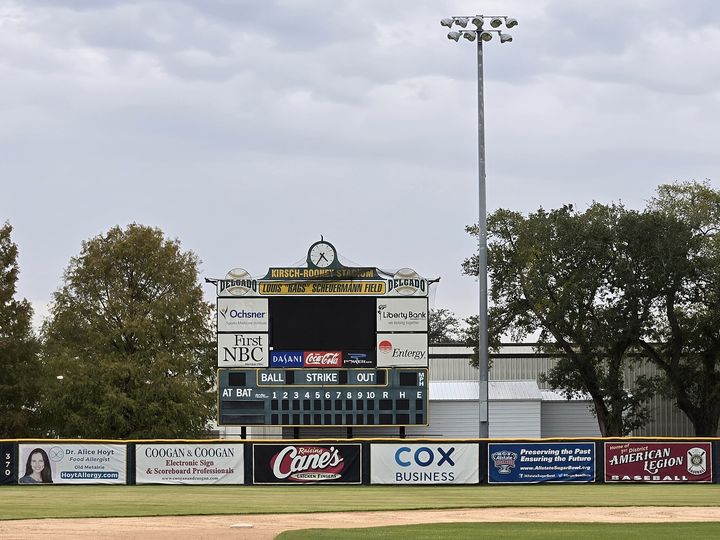
Photo: Spatms, CC BY-SA 4.0 · source file

One cycle, three seasons
Our rules document, published at lgofleagues.com/rules/, opens with the 2018 calendar that still defines the rhythm. The cycle begins March 17 with a single draft board covering all three sports. Football follows its normal calendar: 13 weeks of head-to-head regular season, three weeks of playoffs for six teams, Week 17 excluded. Baseball runs the full 2018 MLB season. Basketball spans 2018-19. A supplemental snake draft in August refreshes rosters before football begins.
The sequence matters. Football ends first, in January. Basketball runs deep into winter. Baseball stretches across the entire summer. A manager cannot simply write off one sport and hope to recover later. The standings update continuously, and the psychological weight shifts with the calendar. August baseball standings sit beside January football results on the same ledger.
The league at a glance
- Teams
- 14
- Sports
- NFL · MLB · NBA
- Roster slots per team
- 49
- Draft picks on file
- 700
- Rounds
- 50
- Trades on file
- 74
Every figure counted from the league’s own tables, not estimated.
Three scoring systems that do not match
Each sport uses a format that would be familiar to specialists, but the three formats do not speak the same language.
Football is head-to-head and weekly. Our rules specify: "normal head-to-head format, normal NFL scoring rules re: yards, 4 points for TD pass, 6 for TD run or catch, etc. Straight wins and losses per week." Thirteen weeks determine seeding. Six teams advance. Three weeks of playoffs follow. The champion is the last team standing.
Baseball is rotisserie. Our rules read: "5 x 5 roto, except OBP instead of AVG. So HR/RBI/Runs/SB/OBP, plus Wins/K/Saves/ERA/WHIP." No weekly matchups. Categories accumulate across six months. A manager might lead home runs by 40 on Memorial Day and watch the gap close by Labor Day.
Basketball is also rotisserie: "normal 8-category roto: points, rebs, assists, steals, blocks, threes, FT%, FG%." Like baseball, it rewards patience and category management. Unlike baseball, it runs concurrent with football's most intense weeks.
A manager must hold three different strategic mindsets simultaneously. Weekly urgency in fall. Categorical patience through summer. Categorical patience again through winter, but with different categories and different player pools.
How a finish becomes points
The bridge between formats is the points table. Our rules specify a fixed conversion: champion receives 14 points, last place receives 1, with linear spacing between. Second place gets 13. Third gets 12. The pattern continues down the standings.
Each sport applies this conversion separately. A team finishing third in football, fifth in baseball, and second in basketball accumulates 12 + 10 + 13 = 35 points. The arithmetic is simple. The implications are not.
The maximum 42 points requires winning all three sports. No team has publicly done so in any cycle the rules document covers. More commonly, championships are built from consistency across two sports and competent survival in the third. A football title can be erased by a baseball collapse. A basketball surge can rescue a football disappointment.
The separation between first and last in any single sport is 13 points. That is the margin of a full second-place finish. A manager trailing by 8 points entering basketball season needs not merely a good basketball team but a championship basketball team to overtake the leader. The math punishes partial comebacks.
What the format asks of a manager
Forty-nine roster slots divide unevenly: 13 for football, 25 for baseball, 11 for basketball. The imbalance reflects baseball's deeper player pools and longer season, not any philosophical preference.
The keeper rule complicates planning further. Each team may retain up to six players total across all sports, with lists due 15 to 30 days before the next draft. A manager must decide in March which football stars might be worth sacrificing baseball depth for, and which basketball prospects might justify leaving football slots empty. The decision binds for the full calendar year.
Three separate FAAB budgets operate as tradable assets. Each sport maintains its own free-agent acquisition budget. These budgets can be traded between owners. Critically, our rules allow trading of the following season's FAAB during the current season. During 2018-2019, owners could trade 2019-2020 FAAB. This creates a futures market in roster flexibility that extends beyond any single cycle.
The actual weekly workload varies dramatically. Football demands lineups and waiver attention for 16 weeks. Baseball requires daily monitoring for 26 weeks. Basketball fills the gaps with a schedule dense enough to demand attention but structured enough to allow rotisserie patience.
Where a multi-sport season goes wrong
The format's designers anticipated three structural failures that single-sport leagues never face.
First, the dead season problem. A team mathematically eliminated from football contention by November faces four months of irrelevant basketball and baseball before the next draft. Our points conversion mitigates this but does not eliminate it. Every position carries value, even sixth place, even ninth. The incentive to compete persists but thins.
Second, the cross-sport keeper dilemma. A manager dominant in baseball might hoard six baseball keepers and enter football and basketball severely undermanned. The rules permit this. The points table punishes it harshly if those other sports collapse.
Third, the FAAB complexity. Three separate budgets, each tradable, with future seasons also tradable, creates accounting challenges that single-sport leagues avoid. A trade of 2019-2020 basketball FAAB during the 2018-2019 season requires trust in a manager who may not be in the league when that currency becomes spendable.
The 42-point maximum ultimately defines the strategic landscape. A manager finishing sixth in football (9 points), third in baseball (12 points), and second in basketball (13 points) reaches 34 points. That total can win cycles. It requires no single dominant performance, only competent survival across all three sports. The football champion who collapses in baseball and basketball finishes with 14 points plus minimal returns. The consistent competitor with no single title often prevails.
More in Formats
 202OBP Instead of Average: One Category, a Different LeagueWe score on-base percentage instead of batting average, and that one column rewrites the hitter pool.MLB
 OBP03Turning Three Seasons Into One TableWe turn three season tables into one number, and the arithmetic is the part managers misread.
 3
3