FORMATSPublished 4 min read
Roto and Head-to-Head in the Same League
We score weekly wins and season-long tallies in the same league, and the two systems do not measure the same thing.
Last reviewed
Our board runs head-to-head football against rotisserie baseball and basketball side by side, which means two incompatible ideas of a good week are converted into the same currency. The same 14 points go to the NFL manager who survives three playoff weeks and the roto player who dominates five categories for six months.

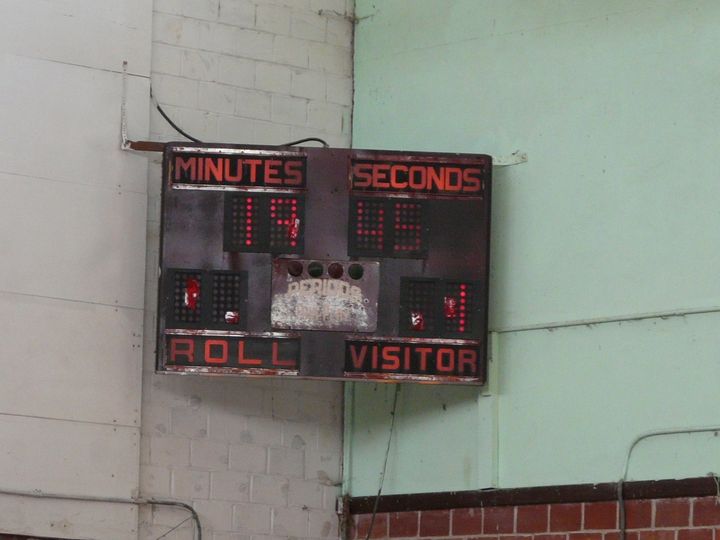
Photo: Kenneth C. Zirkel, CC BY-SA 4.0 · source file

What head-to-head asks of you
Football plays by the standard weekly duel. Thirteen regular-season weeks, straight wins and losses, no margin of victory to carry forward. Touchdown passes net four points, rushing or receiving touchdowns six. Yardage piles up by the rules you will find in any NFL fantasy league, except ours strips out Week 17 and ignores PPR entirely. Six teams qualify for the playoffs, which consume three weeks. One bad Sunday in December and your accumulated record evaporates; one hot streak and a.500 team can hoist the trophy.
The roster resets every seven days. Injuries and byes force constant shuffling. A player ruled out at 11 a.m. on Sunday is dead weight; there is no category cushion to absorb the loss. The format rewards timing, news-gathering, and nerves. By January, only one manager has added wins for three straight weeks. Everyone else has stopped counting.
How this league scores
- NFL
- normal head-to-head format, normal NFL scoring rules re: yards, 4 points for TD pass, 6 for TD run or catch, etc. Straight wins and losses per week. 13 weeks of regular season, then 3 weeks of playoffs (6 teams), same as regular NFL fantasy leagues (Week 17 doesn’t count). NOT PPR
- MLB
- 5 x 5 roto, except OBP instead of AVG. So HR/RBI/Runs/SB/OBP, plus Wins/K/Saves/ERA/WHIP
- NBA
- normal 8-category roto: points, rebs, assists, steals, blocks, threes, FT%, FG%
Source: the league rules document. Quoted as written — nothing is paraphrased and nothing is added.
What rotisserie asks instead
Baseball and basketball operate on an entirely different clock. Our baseball line runs five by five with on-base percentage swapped in for average: home runs, RBI, runs, steals, and OBP on the hitting side; wins, strikeouts, saves, ERA, and WHIP for arms. Basketball stacks eight categories—points, rebounds, assists, steals, blocks, threes, free-throw percentage, and field-goal percentage—across a season that spans months, not hours.
No single day decides your fate. A category lead built in April matters as much as one built in September. You cannot "win" a week; you can only improve your standing in ratios that update nightly. A roster built for roto punts one category to dominate four, or chases balance across the board. The strategy unfolds over 162 games or 82, not thirteen discrete contests. The patient manager who ignored April slumps may lap the field by August.
The conversion that makes them comparable
Our rules compress every finish into a single scale. First place in any sport earns 14 points, last place earns 1, and the thirteen steps between are fixed before the first pitch or kickoff. A football champion and a baseball champion arrive at identical numbers through opposite paths. The maximum combined score across three seasons sits at 42 points, though no one has hit that ceiling in our ledger's memory.
The arithmetic is ruthless. A football manager who dominates the regular season, loses his playoff opener, and finishes third collects 12 league points. A baseball manager who threads the needle in five categories all summer and takes second also collects 13. The systems are incomparable in design but fungible in our standings. The conversion happens after the fact, invisible to the play itself. You cannot game the crossover; you can only win your format and hope the points hold.
Where the two systems pull against each other
The practical tension lives in roster construction. Football demands disposable parts—handcuff running backs, streamable defenses, a kicker you will cut twelve times. Every slot serves the immediate week. Roto baseball and basketball reward permanence. You draft a shortstop in March to carry you to October. Trading a top-ten player for eight weeks of a hot bat is heresy; in football, it is Tuesday.
Our league asks the same managers to switch brains mid-winter. The football player who just survived on waiver-wire speed must now contemplate ratio stability. The roto veteran who spent six months ignoring weekly fluctuations must accept that three playoff losses erase a 10-3 record. The skills do not transfer. A sharp football mind can crater in baseball by over-managing; a roto grinder can miss the football playoffs by playing for consistency when volatility wins.
Even the language fractures. "Going for it on fourth down" has no roto equivalent. "Punting steals" would get you laughed out of a football draft. Our league forces both dialects into the same conversation, and the confusion is real. New members often treat football like a category game, building for season-long yardage totals, or attack roto like a weekly matchup, trading away future ratios for a single good weekend.
Settling the football playoffs
The conversion grows thorniest at the margins. Six teams make our football bracket; three survive the first weekend; two reach the final. But four teams lose along the way, and our rules must order them. The league falls back on regular-season finish: a 9-4 team bounced in the first round outranks an 8-5 team bounced in the second. The playoff bracket does not restart the standings; it merely overlays them.
This matters for the final table. A manager who backed into the playoffs at 7-6 and runs hot for two weeks can reach the final and secure at least second place. A 10-3 juggernaut that stubs its toe in the opening round might finish fourth, collecting 11 points instead of 13. The gap is small in absolute terms, but the standings are tight. One point separates champions from also-rans in most years.
The rule is specific to football. Roto has no playoff bracket, no single-elimination trap. The contrast is the point. Our league marries formats that were never meant to share a ledger, then asks its members to navigate both. The 14 points do not care how you earned them.
More in Formats
 OBP02Turning Three Seasons Into One TableWe turn three season tables into one number, and the arithmetic is the part managers misread.
 303Multi-Sport Fantasy Leagues, ExplainedWe run one competition across three sports, so here is how the format works before you argue about the scoring.
 3
3